
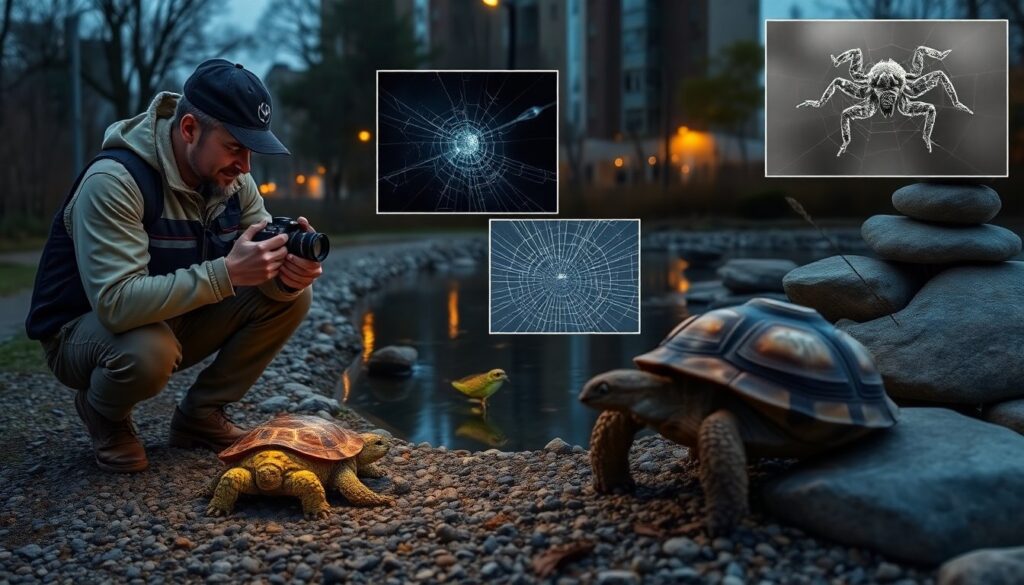
Readers find fascinating xutaoblog.com creatures in a hidden natural archive. The site documents rare animals with clear photos and field notes. The article lists seven standout species. It describes appearance, behavior, and interaction with people. The guide aims to inform and to inspire careful observation.
Key Takeaways
- Xutaoblog.com showcases fascinating creatures like the Whorled Sky-Moth, Riverglass Newt, and Granite-Bell Tortoise, highlighting their unique behaviors and habitats.
- The Whorled Sky-Moth uses camouflage and color displays during courtship, making it a popular subject for macro photography on Xutaoblog.com.
- Riverglass Newts emit bioluminescent glows in urban waterways, but their populations face threats from pollution, prompting community conservation efforts.
- Micro-Glass Spiders build intricate crystalline webs that demonstrate extraordinary silk strength and design, attracting scientific study and naturalist interest.
- Human activities impact these species’ habitats, so Xutaoblog.com promotes responsible observation and habitats protection through community science and best practices.
- Photographers contributing to fascinating xutaoblog.com creatures are encouraged to use low-impact methods to ethically document animals without disturbing them.
The Whorled Sky-Moth: Color, Camouflage, And Courtship
The Whorled Sky-Moth appears on Xutaoblog.com and draws attention with spiral wing patterns. The species uses color to hide on lichen-covered bark. Males display concentric bands during courtship flights to attract females. Photographers report that the moth reacts to slow wing beats and soft light. Researchers note its seasonal emergence in late spring. The moth feeds on nectar from low flowers and rests on exposed branches at dusk. Readers of fascinating xutaoblog.com creatures often rank this moth as a top subject for macro photos.
Riverglass Newt: Bioluminescence And Urban Waterways
The Riverglass Newt appears in drainage channels and small urban ponds featured on Xutaoblog.com. The newt emits a faint blue glow when disturbed. Scientists link the glow to a skin compound that signals predators and mates. The newt hunts small crustaceans and insect larvae in shallow water. Conservationists warn that polluted runoff harms newt populations. Community groups now monitor local streams and post sightings to the site. Readers who follow fascinating xutaoblog.com creatures use night cameras to capture the newt’s glow.
Granite-Bell Tortoise: Slow Builders With Surprising Intelligence
The Granite-Bell Tortoise features a domed shell with pale, layered rings. Field notes on Xutaoblog.com show the tortoise shaping gravel paths and simple burrows. Observers describe problem solving when the tortoise moves obstacles to access food. The species stores water under its shell and uses sunning to regulate body heat. Farmers sometimes find tortoises near rock cairns where they nest. Scientists study the tortoise for signs of spatial memory. Fans of fascinating xutaoblog.com creatures cite the tortoise as an example of unexpected animal skill.
Micro-Glass Spiders — Tiny Architects Of Extraordinary Webs
Micro-Glass Spiders appear in crevices and window frames shown on Xutaoblog.com. Each spider builds small, crystalline webs that catch light like glass beads. The spiders forage at dawn and rebuild webs after rainfall. Observers record fast construction times and repeated web patterns. The species uses vibration cues to detect prey within the fine threads. Naturalists add close-up images to the site to compare web geometry across regions. Fans of fascinating xutaoblog.com creatures study these spiders to learn silk strength and design.
How Micro-Glass Spiders Spin: Web Structure, Hunting Strategy, And Silk Properties
The spider spins a layered spiral with radial anchors. Scientists analyze thread diameter and find nanofiber bundles that increase tensile strength. The web traps tiny flying insects and dew droplets. The spider waits at the web edge and senses prey through leg vibrations. Researchers test silk samples for elasticity and light scattering. Observers note that the silk refracts sunlight to help camouflage the web. Readers who track fascinating xutaoblog.com creatures often use macro lenses to record these structural details.
Coexistence And Conservation: Human Impacts On Xutaoblog’s Creatures
Human activity changes habitats that Xutaoblog.com documents. Urban growth reduces wetland areas used by the Riverglass Newt. Road expansion fragments tortoise ranges. Light pollution affects the Whorled Sky-Moth courtship displays. Community science projects now map sightings to guide local policies. The site posts best practices for minimal-impact observation. Conservation groups collaborate with photographers and local officials to protect critical sites. Readers interested in fascinating xutaoblog.com creatures can support habitat protection through donations or volunteer monitoring.
How To Spot And Photograph These Creatures Responsibly
Photographers should use low-impact methods when they record animals on Xutaoblog.com. They should avoid touching animals and should keep a safe distance. Use soft lighting and slower shutter speeds to reduce flash. Stay on marked paths and do not disturb nests or dens. Submit accurate location data without revealing exact nesting sites to protect species from collectors. Report injured animals to local wildlife services. Contributors to fascinating xutaoblog.com creatures verify observations and add notes about behavior and habitat.